
Industrial valves are widely used in oil and gas, petrochemical processing, power generation, water treatment, and pipeline transportation. Their reliability directly affects the safety and efficiency of industrial fluid systems.
Before delivery or after maintenance, valves often need to undergo pressure and leakage inspections to verify their structural integrity and sealing performance.
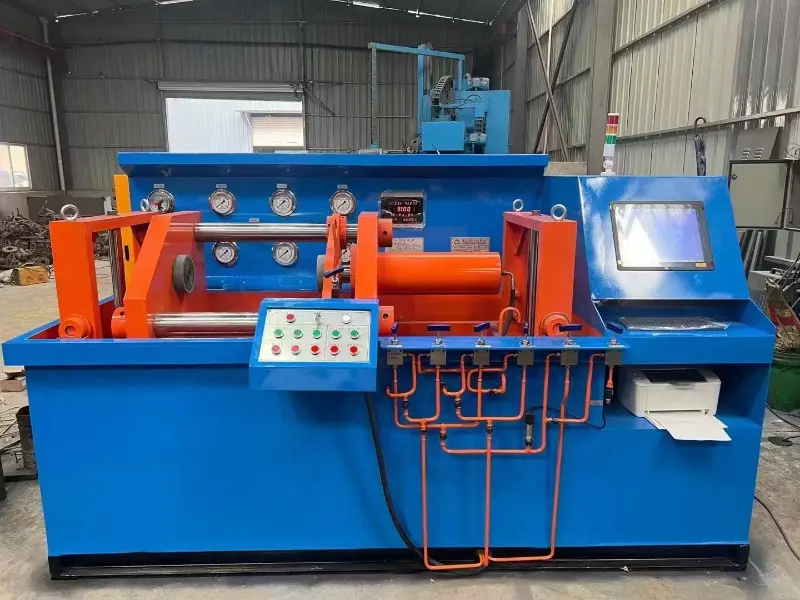
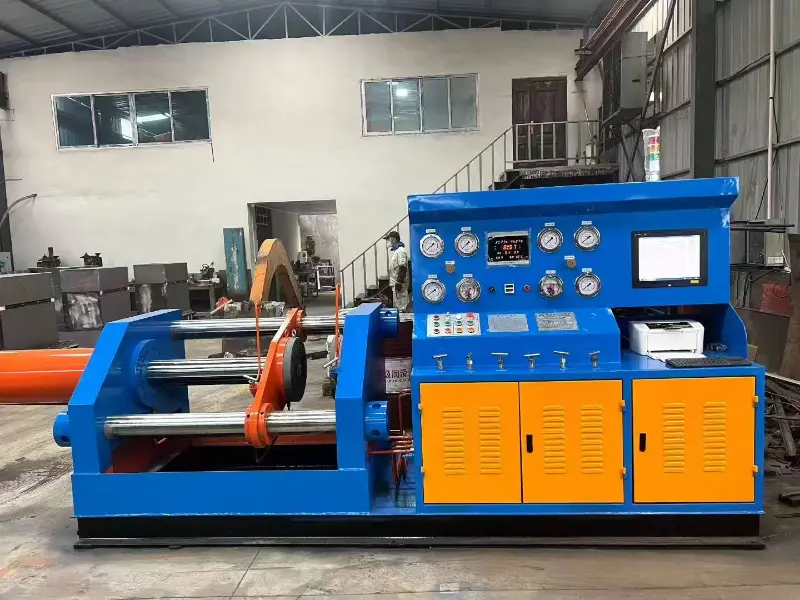
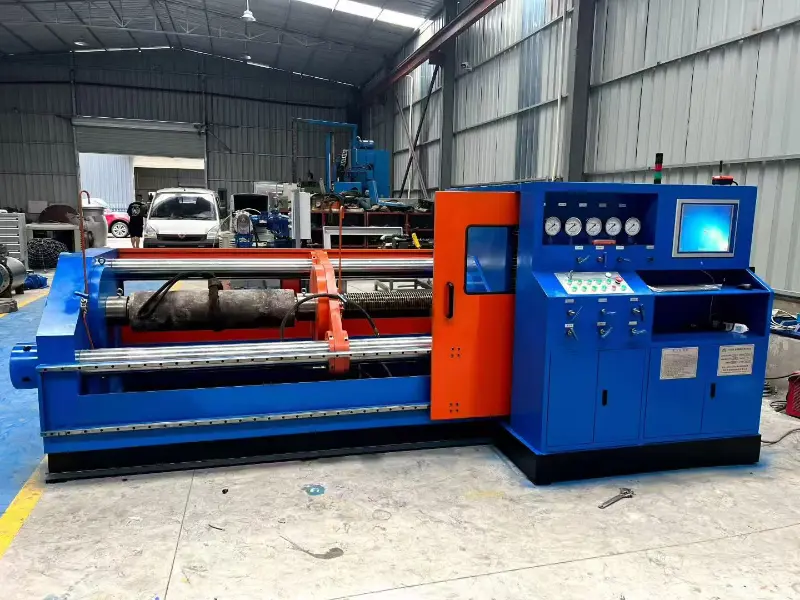
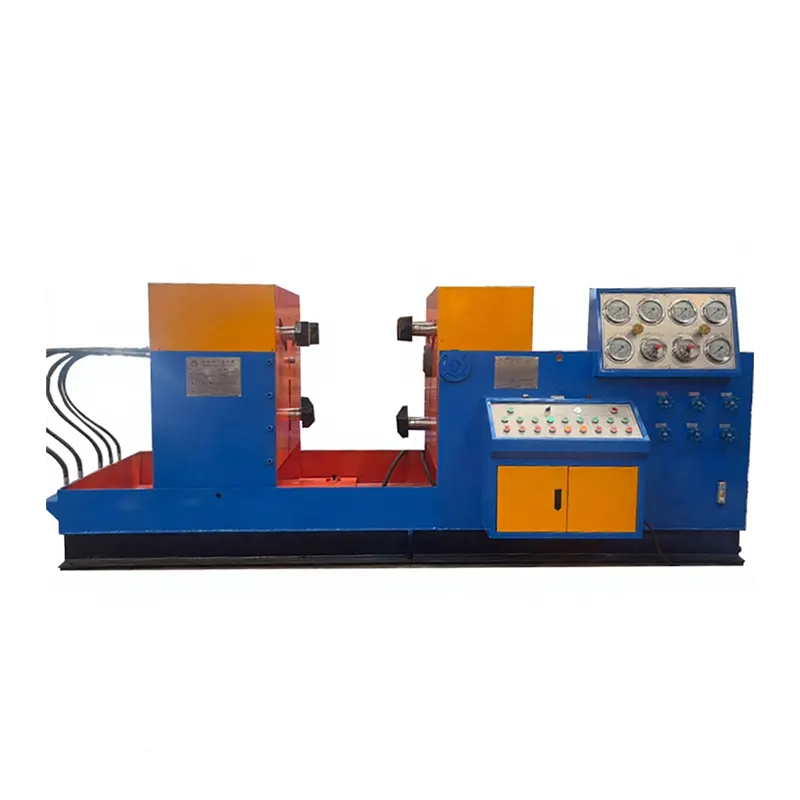
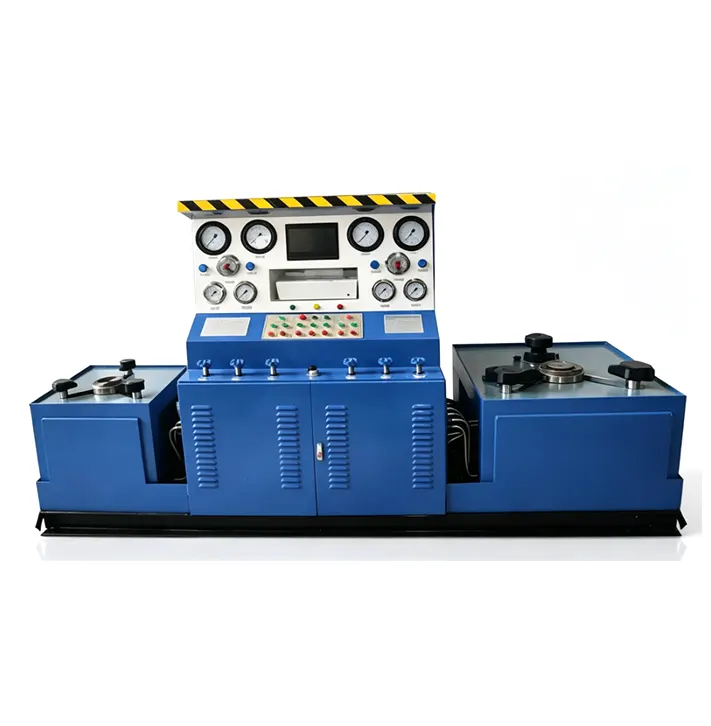
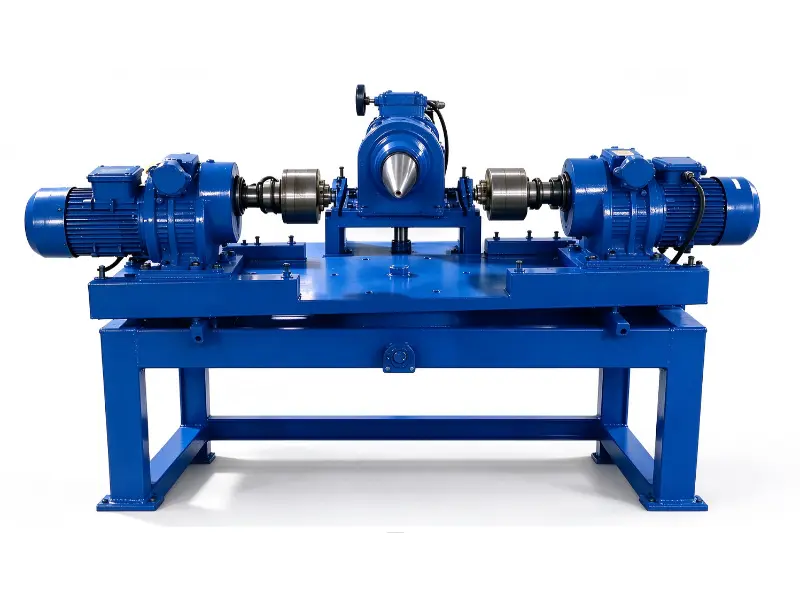
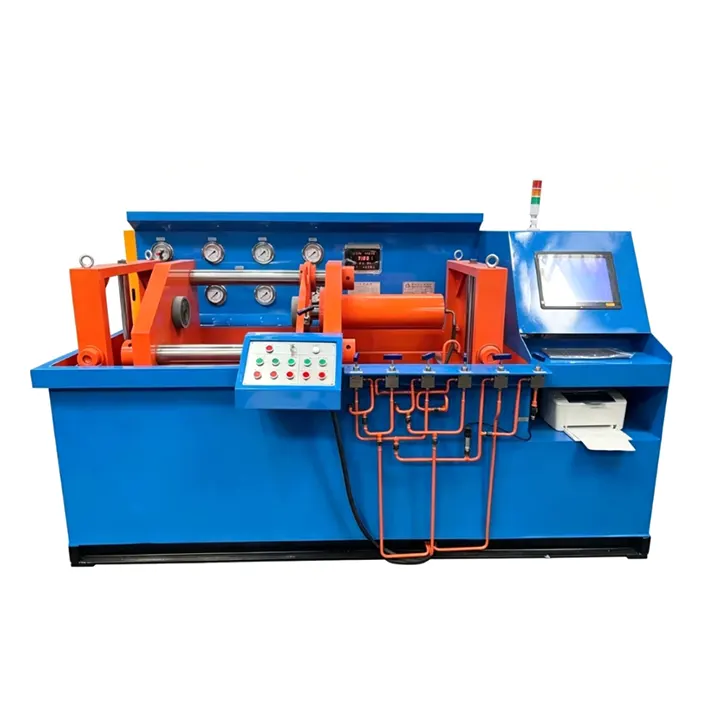
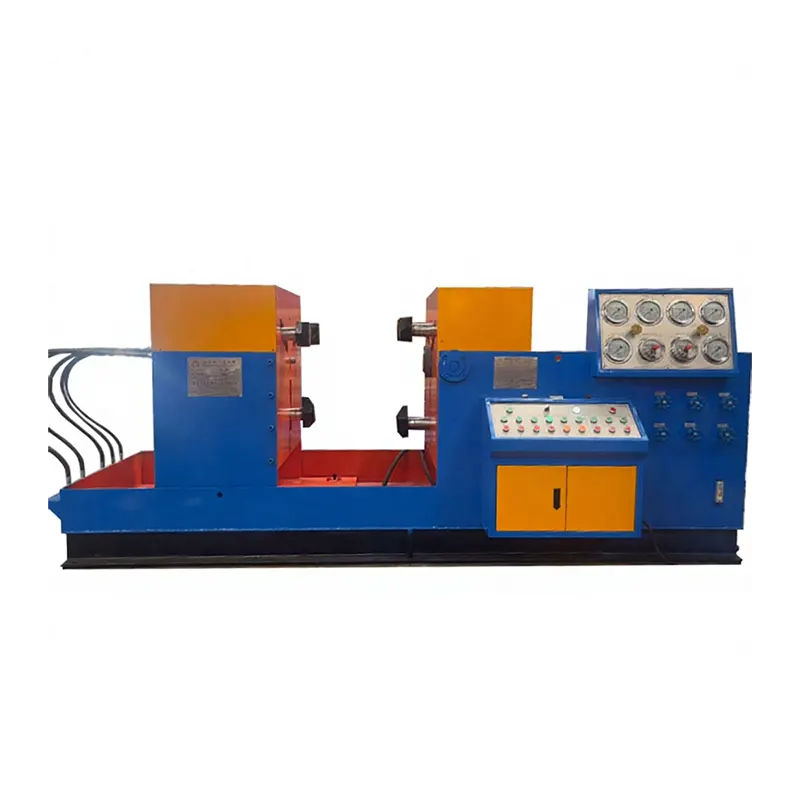
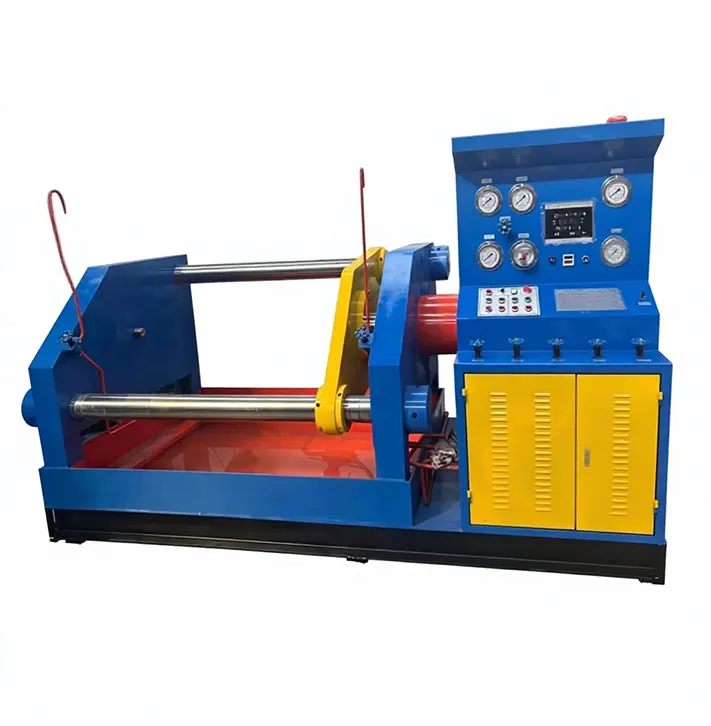
A valve test bench, also known as a valve pressure testing machine, is specialized equipment designed to hold industrial valves securely and perform specified pressure and leakage tests under controlled conditions.
For valve manufacturers and maintenance facilities, choosing the right valve testing equipment is important for establishing a reliable inspection process.
In this article, we will explain how a valve test bench works, introduce its main types, discuss common testing methods, and explore the factors buyers should consider when selecting suitable equipment.
1. What Is a Valve Test Bench?
A valve test bench is an industrial machine used to perform pressure and leakage tests on different types of valves.
It typically consists of a mechanical frame, clamping mechanism, sealing components, pressure supply system, control system, and safety protection devices.
During operation, the valve is positioned and secured on the machine. A specified testing medium, such as water or compressed air, is introduced into the valve. The testing system controls the pressure according to the required procedure, allowing operators to evaluate the valve's pressure resistance and sealing performance.
Depending on the equipment configuration and testing requirements, a valve test bench can perform:
Industrial valve manufacturing factories.
2. How Does a Valve Test Bench Work?
Although valve test benches are available in different designs, their basic operating procedures generally follow several stages.
2.1 Valve Loading and Positioning
First, the valve is placed in the designated testing area.
The operator positions the valve according to its dimensions, connection type, and structural characteristics.
Proper alignment is important because an unsuitable position may affect clamping stability and sealing performance.
2.2 Hydraulic Clamping and SealingAfter positioning, the machine's clamping mechanism secures the valve.
Depending on the equipment design, hydraulic cylinders or other mechanical mechanisms may be used to apply the required clamping force.
The sealing components establish a suitable connection between the test equipment and the valve.
Different valve structures and dimensions may require different sealing fixtures and clamping arrangements.
2.3 Test Medium SupplyThe specified testing medium is introduced into the valve.
Common testing media include:
The appropriate medium depends on the valve design, applicable standard, customer specifications, and testing method.
2.4 Pressure Control and HoldingThe pressure supply system increases the internal pressure to the specified test level.
The pressure is monitored and maintained for the required holding period.
A suitable pressure control system helps operators perform testing procedures consistently.
The required pressure and holding time must be determined according to the applicable standard and testing specification, rather than simply using the maximum pressure capacity of the machine.
2.5 Leakage Inspection and Result Evaluation
During testing, operators inspect the valve body, sealing areas, and relevant connections for leakage.
The results are evaluated according to the applicable acceptance criteria.
2.6 Pressure Release and Unloading
After testing is completed, the pressure must be safely released according to the equipment's operating procedure.
The operator can then remove the valve from the machine for further inspection, assembly, or the next production process.
3. Main Types of Valve Test Benches
Different industrial valves have different structural designs, dimensions, and pressure requirements. Therefore, valve testing machines are available in several configurations.
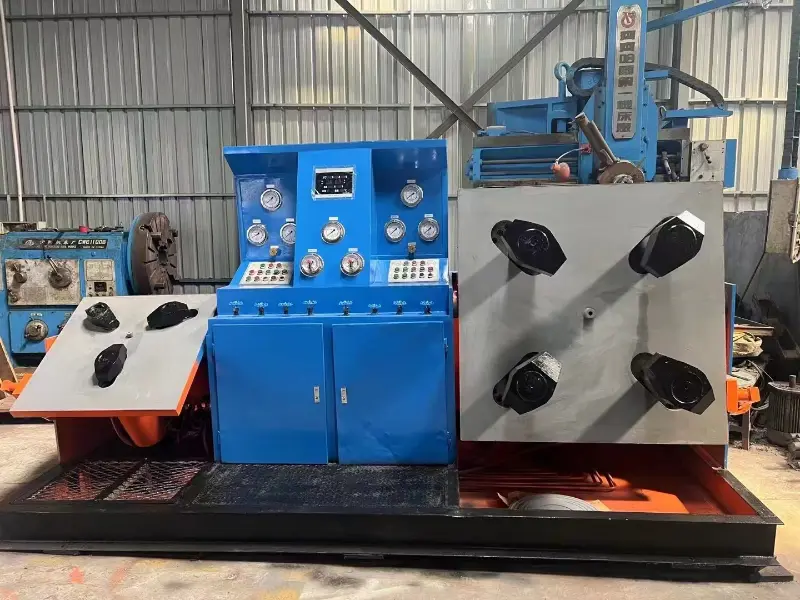
3.1 Gripper-Type Hydraulic Valve Test Bench
A gripper-type hydraulic valve test bench uses hydraulic clamping structures to secure the valve during pressure testing.
This configuration is commonly used for applications requiring flexible clamping arrangements.
Its design can be adapted to different valve dimensions and structural requirements.
Important considerations include clamping stability, sealing fixture design, operating range, and the required test pressure.
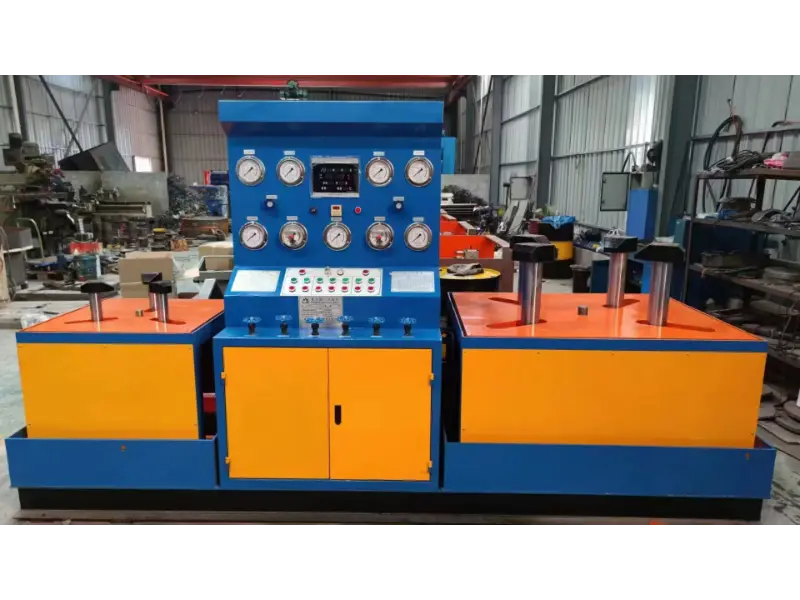
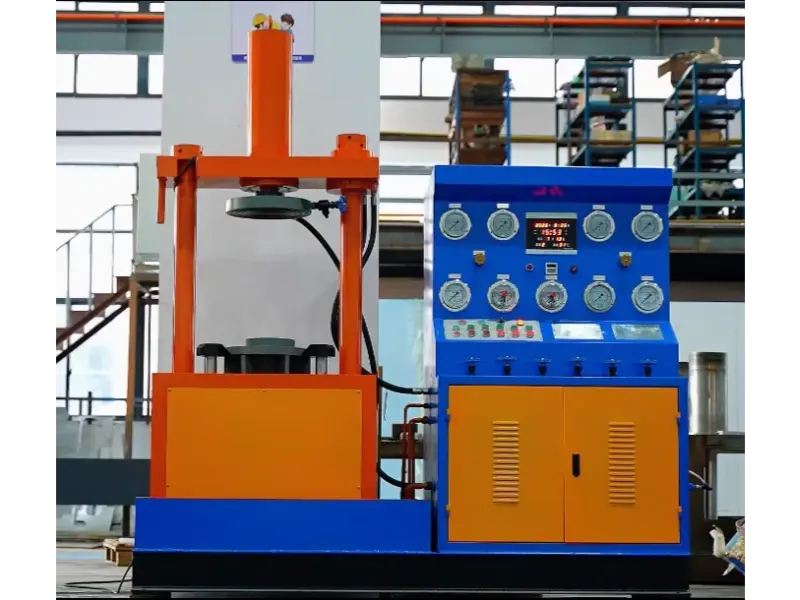
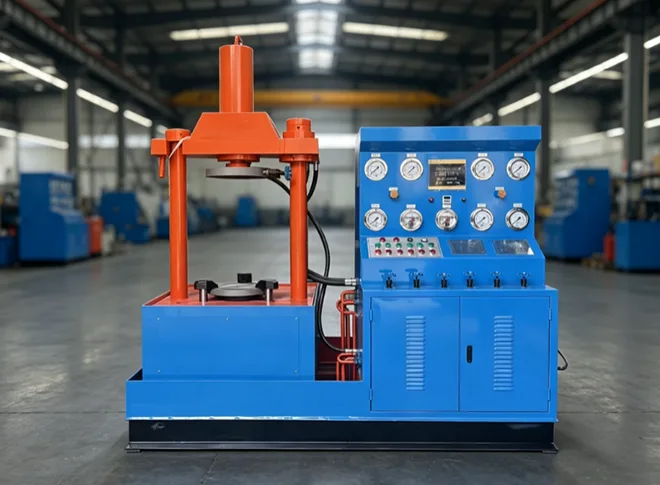
3.2 Top-Pressure Valve Test Bench
A top-pressure valve test bench uses an axial pressing structure to secure the valve between sealing surfaces.
The hydraulic pressing system applies controlled force to hold the valve during testing.
This configuration is suitable for specific flanged valve applications, depending on the machine's design and sealing arrangement.
It can be manufactured in different sizes and structures to accommodate different industrial valve testing requirements.
3.3 Butterfly Valve Test Bench
Butterfly valves have a different structural design from conventional gate valves and globe valves.
A dedicated butterfly valve test bench is designed to accommodate the valve body, disc structure, and sealing characteristics.
The clamping and sealing arrangement must be suitable for the particular butterfly valve design.
This equipment is commonly used by manufacturers and maintenance workshops handling butterfly valves.
3.4 Vertical Valve Test Bench
A vertical valve test bench uses a vertical loading and clamping structure.
Depending on its configuration, it can accommodate different valve dimensions and production requirements.
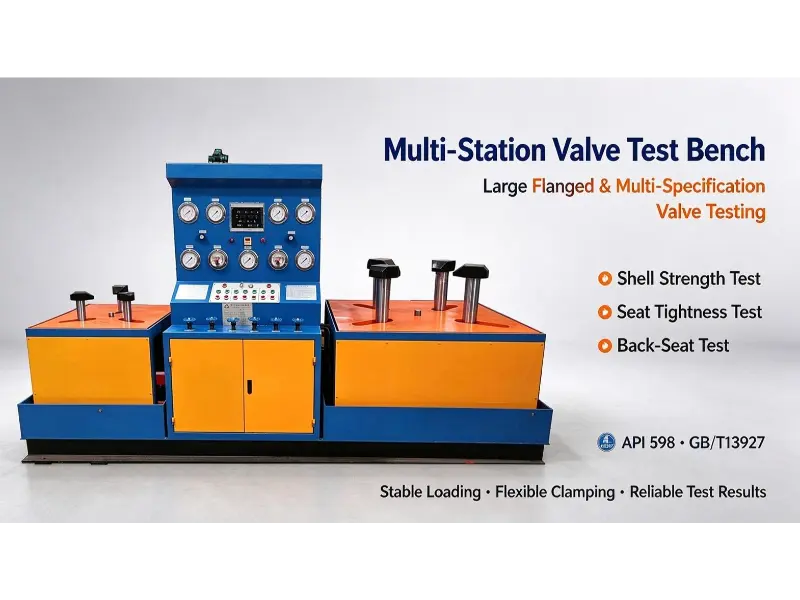
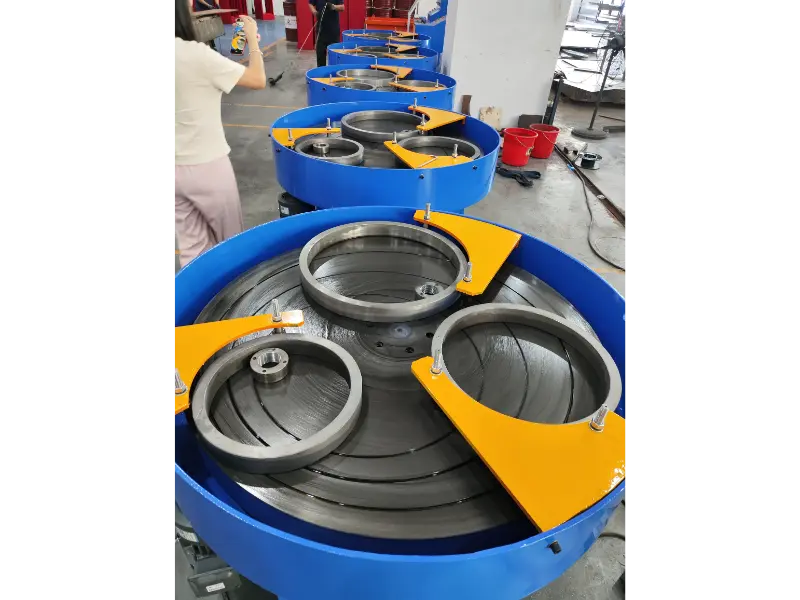
Multi-station vertical valve test benches are also available for applications where several valves need to be tested within the same working area.
Their configuration can help organize testing operations in workshops with frequent inspection requirements.
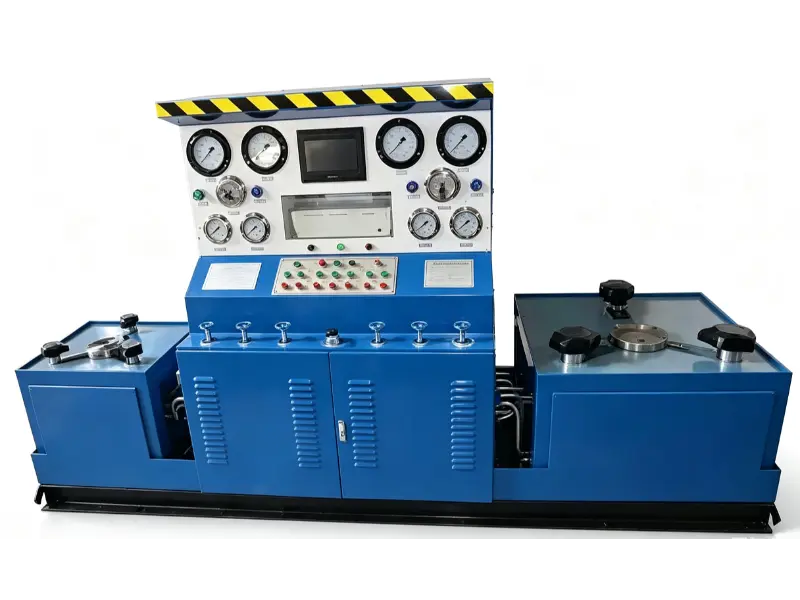
3.5 Intelligent PLC Valve Test Bench
An intelligent valve test bench uses a programmable logic controller (PLC) to manage testing operations.
Depending on the selected configuration, its functions may include:
PLC-based testing equipment is particularly useful for facilities that require more standardized testing procedures.
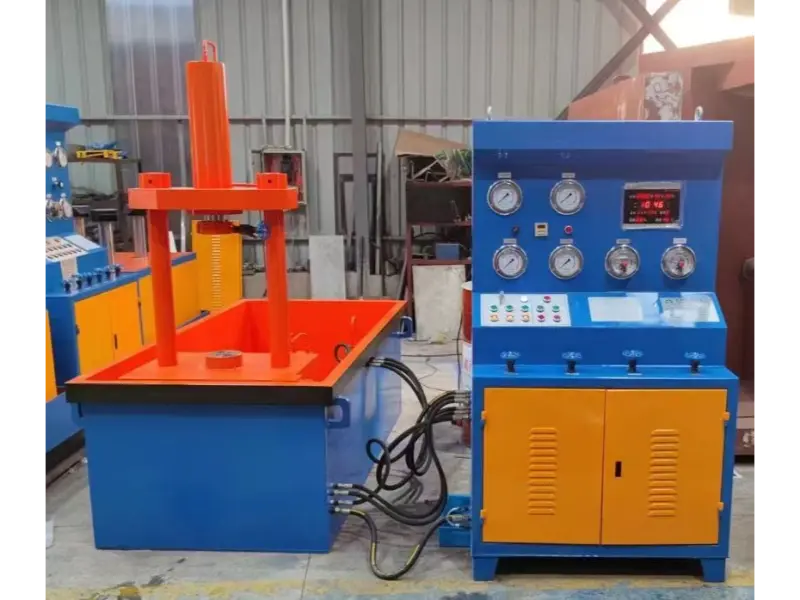
3.6 Submerged Water Tank Valve Test Bench
A submerged water tank valve test bench is designed for specific pneumatic leakage inspection applications.
During testing, the valve is positioned in a water tank and connected to an appropriate air supply system.
Compressed air is introduced according to the specified testing procedure. If leakage occurs at the inspected area, air bubbles may appear in the surrounding water.
This provides a direct visual indication of leakage under suitable testing conditions.
The equipment is commonly considered for valve inspection applications requiring visual bubble observation.
4. What Types of Valves Can Be Tested?
Valve test benches can be configured for different types of industrial valves.
Common applications include:
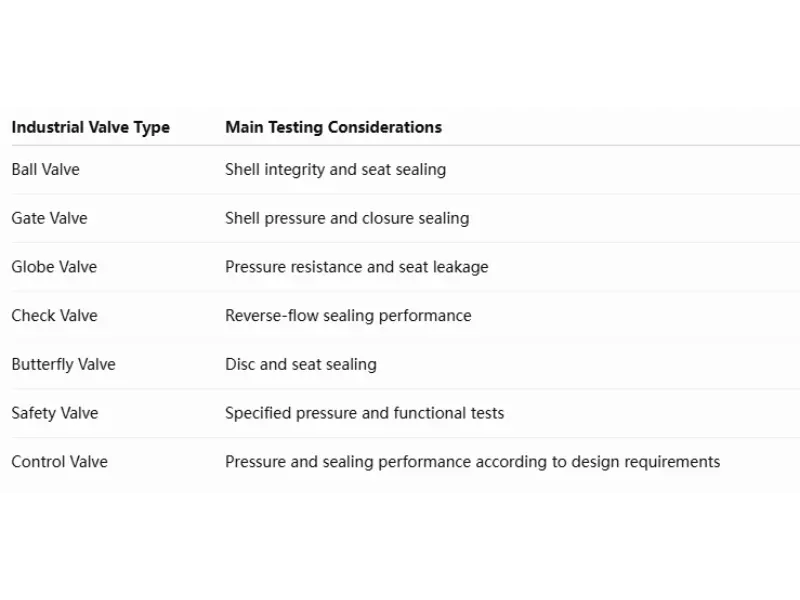
Not all valve types can be tested using the same clamping method or testing procedure.
For example, a ball valve and a butterfly valve have different structural characteristics, which may require different sealing fixtures and positioning arrangements.
Before selecting a machine, buyers should identify the valve types, dimensions, connection styles, pressure ratings, and required testing procedures.
5. Hydrostatic Testing vs. Pneumatic Testing
Hydrostatic testing and pneumatic testing are two commonly used methods in industrial valve inspection.
Although both methods can be used to evaluate pressure-related performance, they differ in testing media, operating procedures, and safety considerations.
5.1 Hydrostatic Testing
Hydrostatic testing generally uses water as the testing medium.
It is widely used for specified valve shell pressure tests and other applicable pressure testing procedures.
Main characteristics include:
Pneumatic testing uses compressed air or another specified gas as the testing medium.
It is commonly used for certain gas leakage inspection procedures and other applications where pneumatic testing is specified.
Main characteristics include:
However, pneumatic testing involves significant stored-energy hazards because gases are compressible.
Appropriate protective measures, controlled pressurization, exclusion zones, and safety procedures are essential.
5.3 Which Testing Method Should Be Used?
The selection of hydrostatic or pneumatic testing depends on:
The testing method should always follow the applicable procedure and safety requirements.
6.1 API 598 – Valve Inspection and Testing
API 598 is an important standard for industrial valve inspection and testing.
It covers inspection, examination, and pressure testing requirements for various valve types, including gate valves, globe valves, plug valves, ball valves, check valves, and butterfly valves.
For valve manufacturers, understanding the applicable API 598 requirements is important when establishing pressure testing procedures.
6.2 ASME Standards
ASME standards are widely referenced in industrial engineering and pressure-related applications.
Depending on the valve design and application, relevant ASME standards may address valve construction, pressure-temperature ratings, and associated engineering requirements.
Buyers should identify the exact standards specified in their project documents rather than assuming that every valve test follows the same ASME requirement.
6.3 GB/T 13927 – Industrial Valves: Pressure Testing
GB/T 13927 is a Chinese national standard covering pressure testing requirements for industrial valves.
It is an important reference for manufacturers and testing facilities operating under relevant Chinese standard requirements.
6.4 What Should Equipment Buyers Understand About These Standards?
An important distinction is that standards for valve products and standards for testing equipment are not necessarily the same.
A valve test bench must be designed and configured to perform the required testing procedures for the valves being inspected.
Before purchasing equipment, buyers should confirm:
A suitable machine configuration should be based on these actual requirements.
7. How to Choose the Right Valve Test Bench?
Selecting a suitable valve test bench requires more than comparing machine prices or maximum pressure ratings.
Buyers should consider the following technical factors.
7.1 Valve Size Range
Determine the minimum and maximum valve sizes that need to be tested.
For example, a workshop handling DN50–DN300 valves may require a different equipment structure from a facility testing large-diameter valves.
The machine's working range, loading arrangement, and sealing fixtures must match the intended valve dimensions.
7.2 Valve Types
Identify the types of valves that need to be tested.
These may include:
Different valve structures may require different clamping and sealing solutions.
7.3 Pressure Requirements
Determine the required test pressure for each valve type and testing procedure.
The hydraulic system, pressure supply components, sealing structures, and protective devices must be suitable for the intended operating conditions.
7.4 Testing Medium
Confirm whether the testing procedures require water, compressed air, nitrogen, or other specified media.
The equipment should be configured to support the required testing methods.
7.5 Clamping Structure
Different machine structures are suitable for different valve applications.
Common configurations include:
The most appropriate design depends on valve dimensions, body geometry, connection types, and production requirements.
7.6 Automation Requirements
For facilities with frequent testing operations, automation can help improve workflow consistency.
Depending on the machine configuration, buyers may consider:
7.7 Workshop Conditions
Available floor space, loading equipment, power supply, water supply, drainage, and operator requirements should also be considered.
A suitable machine should fit both the technical testing requirements and the actual workshop environment.
8. Valve Test Bench Applications in Different Industries
Valve testing equipment is used in various industrial sectors.
Oil and Gas Industry
Oil and gas facilities use industrial valves in pipelines, processing systems, and fluid transportation applications.
Pressure and leakage inspections help verify that valves meet the specified requirements before installation or operation.
Petrochemical Industry
Petrochemical plants use different types of valves to control fluids under demanding operating conditions.
Valve inspection and testing are important parts of equipment manufacturing, maintenance, and quality control.Power Generation IndustryPower plants use industrial valves in steam, water, and other process systems.
Appropriate testing procedures help verify valve integrity and sealing performance.
Water Treatment Industry
Water treatment facilities use gate valves, butterfly valves, check valves, and other industrial valves.
Testing equipment helps manufacturers and maintenance facilities inspect these valves before installation or after repair.
Industrial Valve Manufacturing
Valve manufacturers use test benches as part of their quality inspection processes.
A suitable testing machine can support different production requirements and inspection procedures.
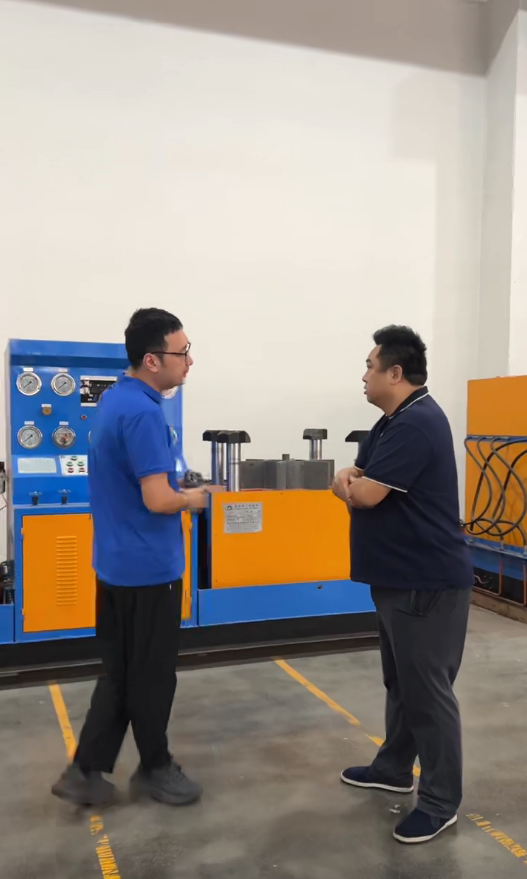
9. Yufeng Machinery – Professional Valve Testing Equipment Manufacturer
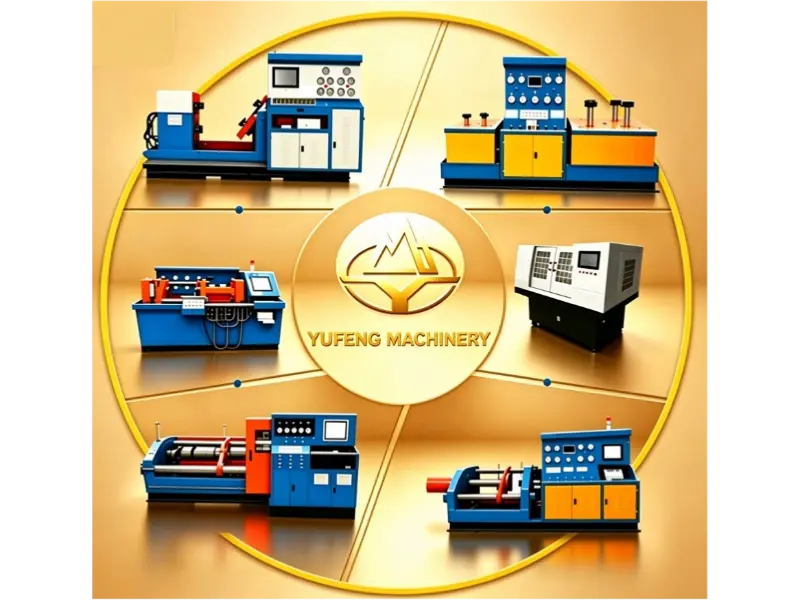
Wenzhou Yufeng Machinery specializes in manufacturing industrial valve test benches and valve grinding machines.
Our main product range focuses on equipment for industrial valve pressure testing, sealing inspection, and valve maintenance applications.
Yufeng's valve testing equipment can be designed and configured for valve sizes ranging from DN15 to DN2200, depending on the machine structure and project requirements.
Different configurations can be developed according to valve dimensions, pressure requirements, testing media, applicable standards, and workshop conditions.
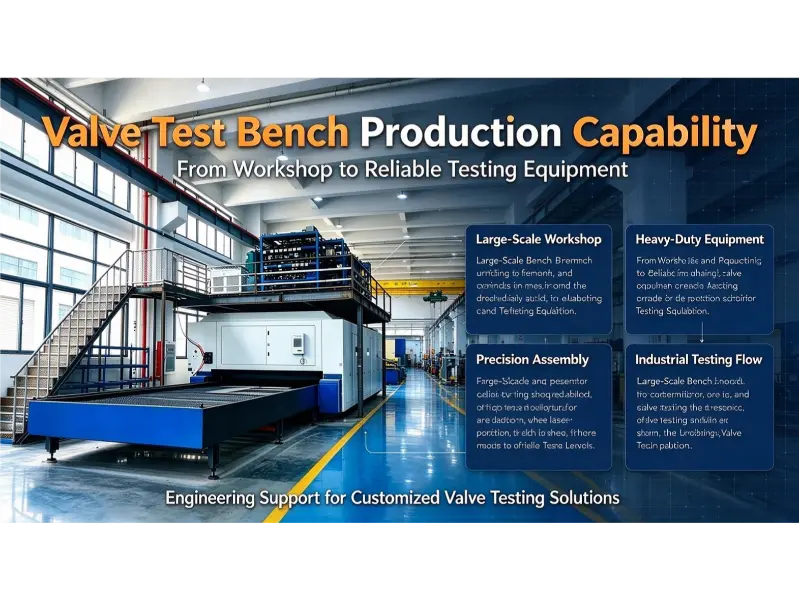
As a specialized equipment manufacturer, we focus on practical machine design, manufacturing, assembly, factory testing, and technical support.
Our goal is to help customers select suitable valve testing solutions based on their actual production and inspection requirements.
For customers who also operate valve repair facilities, Yufeng provides industrial valve grinding machines for sealing surface maintenance and repair applications.
10. Frequently Asked Questions About Valve Test Benches
Q1: What is the main function of a valve test bench?
A valve test bench is used to perform specified pressure and leakage tests on industrial valves to evaluate their pressure integrity and sealing performance.
Q2: Can one valve test bench test different types of valves?
Some valve test benches can accommodate multiple valve types, depending on their clamping structures, sealing fixtures, tooling, and working range.
The actual compatibility should be confirmed with the equipment manufacturer before purchasing.
Q3: What is the difference between a shell test and a seat leakage test?
A shell test evaluates the pressure integrity of the valve pressure-containing body.
A seat leakage test evaluates the sealing performance of the valve closure elements under specified testing conditions.
These tests have different purposes and may require different testing arrangements.
Q4: Can a valve test bench perform both water and air testing?
Some valve test benches can be configured for both hydrostatic and pneumatic testing.
The available functions depend on the machine design, pressure supply system, safety protection, and specified testing procedures.
Q5: What information should I provide when requesting a valve test bench quotation?
To receive a suitable equipment recommendation, buyers should provide:
Valve type.
Valve size range (DN or NPS).
Pressure class.
Required test pressure.
Testing medium.
Applicable testing standards.
Required testing functions.
Expected testing volume.
Providing these details helps the manufacturer evaluate the application and recommend an appropriate machine configuration.
Q6: How do I select a valve test bench for large-diameter valves?
Large-diameter valve testing requires particular attention to machine structure, loading arrangements, hydraulic clamping capacity, sealing fixture design, and available working space.
Buyers should provide the maximum valve diameter, valve type, pressure requirements, and relevant drawings to the equipment manufacturer for technical evaluation.
Conclusion
A valve test bench is essential equipment for industrial valve manufacturers and maintenance facilities.
Different valve types, dimensions, and testing requirements call for different equipment structures and configurations.
Understanding the working principles, testing methods, applicable standards, and machine selection factors can help buyers make more informed equipment purchasing decisions.
Whether you need a gripper-type valve test bench, a top-pressure testing machine, a vertical multi-station system, or an intelligent PLC-controlled solution, the right equipment should be selected according to your actual valve specifications and inspection requirements.
Looking for a suitable valve pressure testing solution?
Contact Yufeng Machinery to discuss your valve sizes, testing pressure, testing methods, and equipment configuration.
Website: https://www.yufengvalvetestbench.com/